
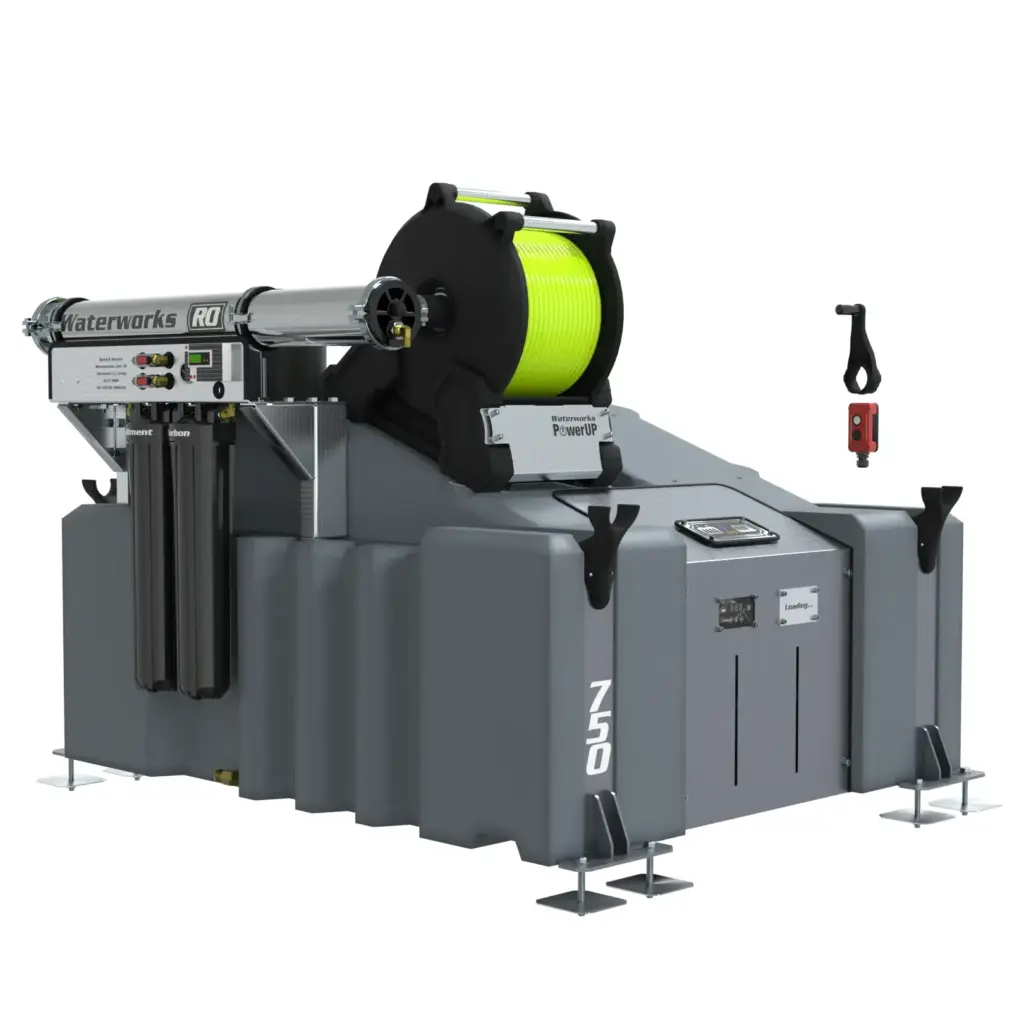
In this guide
THE SHORT ANSWER
The essentials.
This product-development story looks at the thinking behind Waterworks van-mounted systems. Use it to understand the design approach, then compare current capacity, filtration and reel options for your own vehicle.
From the archive. This product story describes the design at its original publication date. Check the current product page for specifications, options and availability.
GUIDE / 01
Designing around the working routine
This archive story describes the thinking behind Waterworks van-mounted systems: water treatment matters, but so do the repeated tasks of arriving, deploying hose, cleaning and packing away.
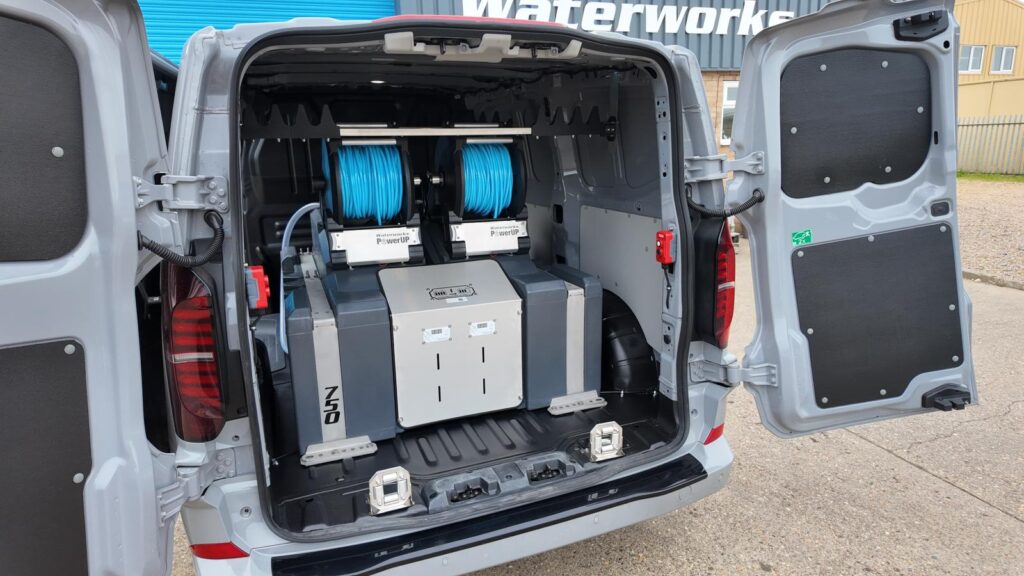
Experience with PowerUP reels, hose guides and security pulleys informed the wider system layout. The aim was to bring equipment together around operator access rather than treat each component as a separate addition.
GUIDE / 02
Access to filtration and servicing
The original design discussion describes treatment equipment positioned for access at the side door, with attention to changing pre-filters, the RO membrane and DI resin. Quick-release arrangements and visible water-quality readings were part of that approach.
These are useful details to inspect when comparing any system. Ask where service water goes, how components are removed and whether maintenance requires moving unrelated equipment.
- Can you reach the filter housings and resin vessel?
- Can the membrane be removed with the available clearance?
- Are the relevant water-quality readings accessible?
- Can routine checks be completed without dismantling the layout?
GUIDE / 03
Reels, controls and storage
Tank-mounted reels can free up floor space and position retrieval controls near a working doorway. Hose guides and through-floor routing options can be considered as part of the same layout.
The appropriate arrangement depends on the vehicle and operator. Check clearances, mounting and access rather than assuming one position will suit everyone. Stored equipment should not obstruct controls or service points.
GUIDE / 04
Electrical and filling arrangements
The historical article discusses battery-to-battery charging, an accessible equipment enclosure, manual flushing controls and an electronic filling shut-off. Those features need to be considered with the exact vehicle and selected system.
Do not treat a historical battery capacity, charger description or suggested RO ratio as the specification for every current configuration. Follow the current component instructions and confirm the installed settings at handover.
GUIDE / 05
Apply the design questions to your next setup
Compare the whole working routine as well as the tank and filtration. Consider how easily you can inspect, clean, maintain and operate the equipment over repeated visits.
Use System Builder to review current options, then confirm the installation and included components with the team. The archive explains the design approach; the current product specification and quotation determine what is supplied today.
YOUR QUESTIONS, ANSWERED
Questions and answers
Are the original battery and charging specifications still standard?
Check the current selected product specification. Historical design notes should not be treated as a current list of included components.
What should I compare besides tank capacity?
Look at maintenance access, reel and hose layout, controls, electrical requirements, mounting and the complete vehicle load.
PUT THE ADVICE TO WORK
Your van. Your system. Your way.
Compare the current options and specifications, then talk to the Waterworks team if you need help matching equipment to your round.
Build your system →FROM THE WATERWORKS TEAM
Practical equipment guides from Waterworks in Corby. For advice about your own configuration, contact the team.
YOUR NEXT READ
Keep building your knowledge.
KEEP READING
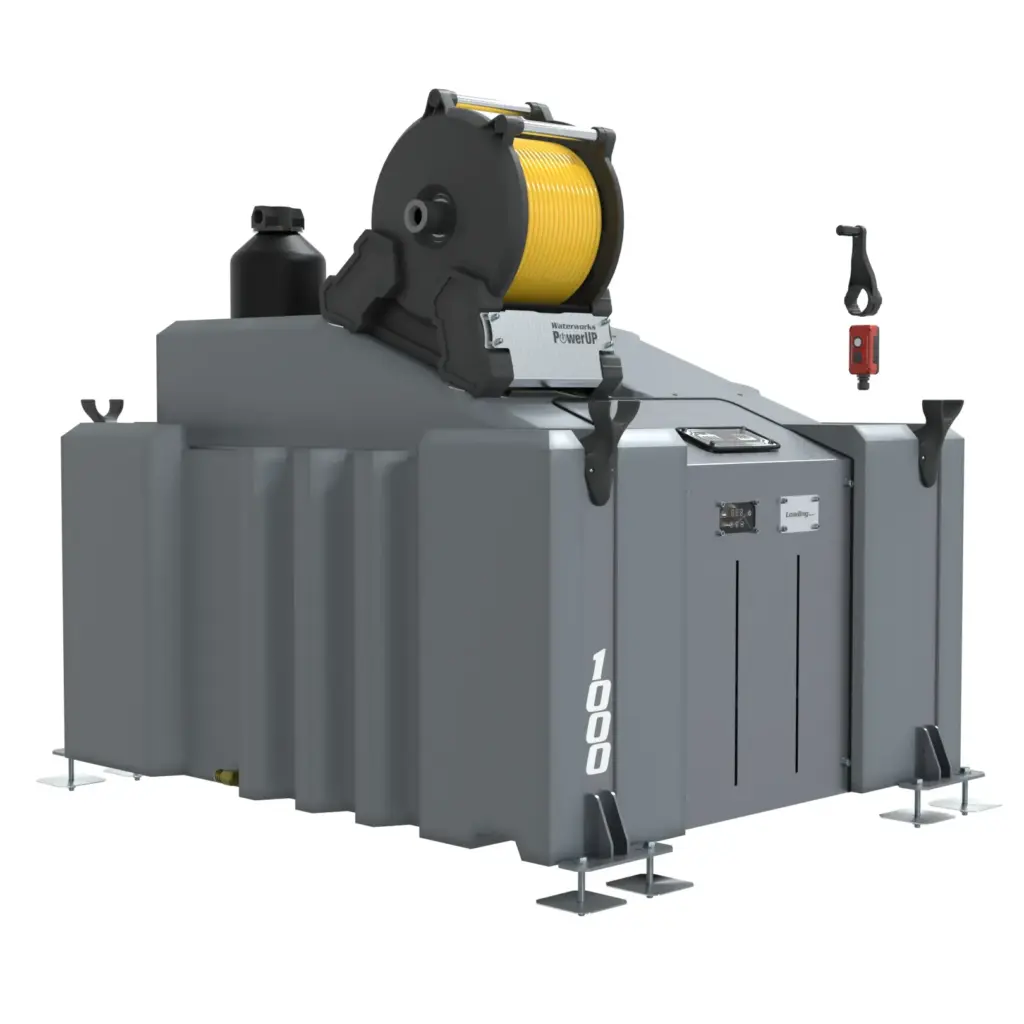
500L, 750L or 1000L: choosing your water tank
Read the guide →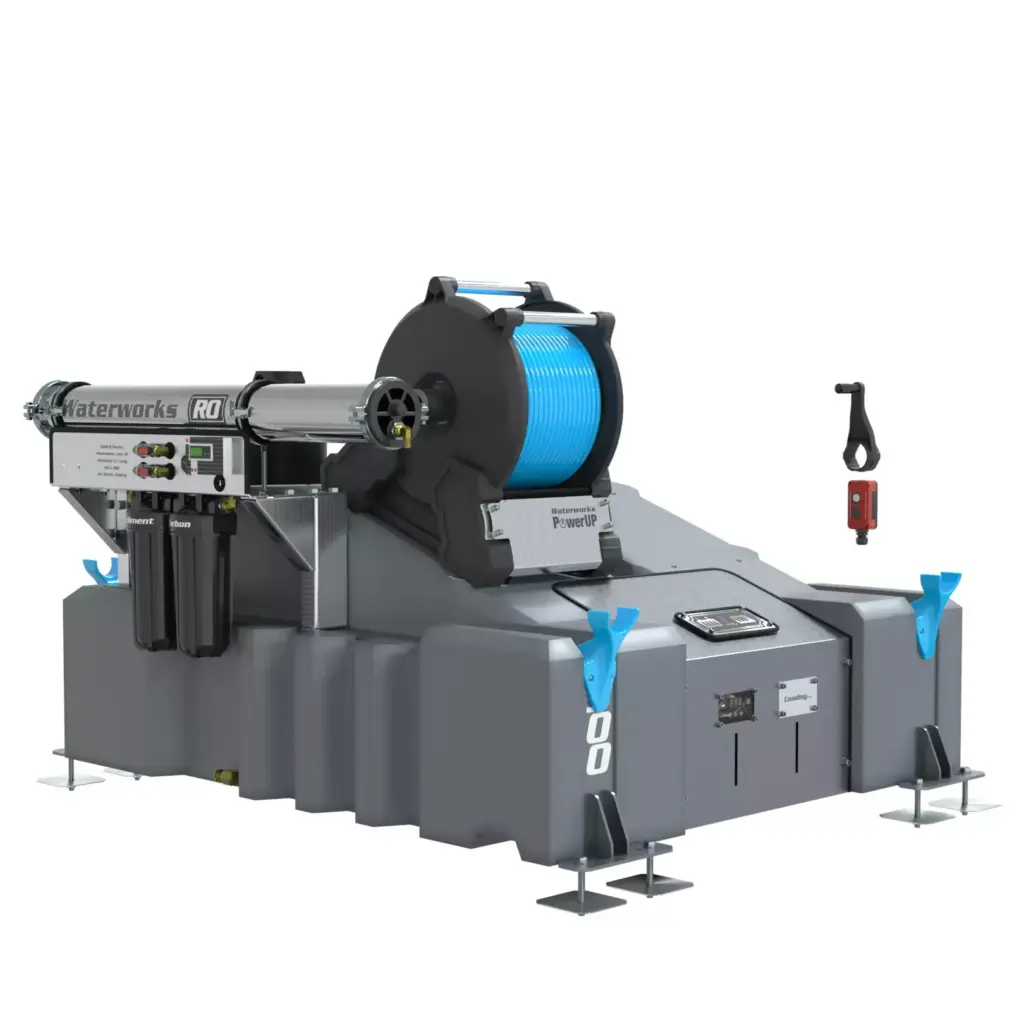
KEEP READING
RO vs DI: choosing a window cleaning system
Read the guide →KEEP READING