
In this guide
THE SHORT ANSWER
The essentials.
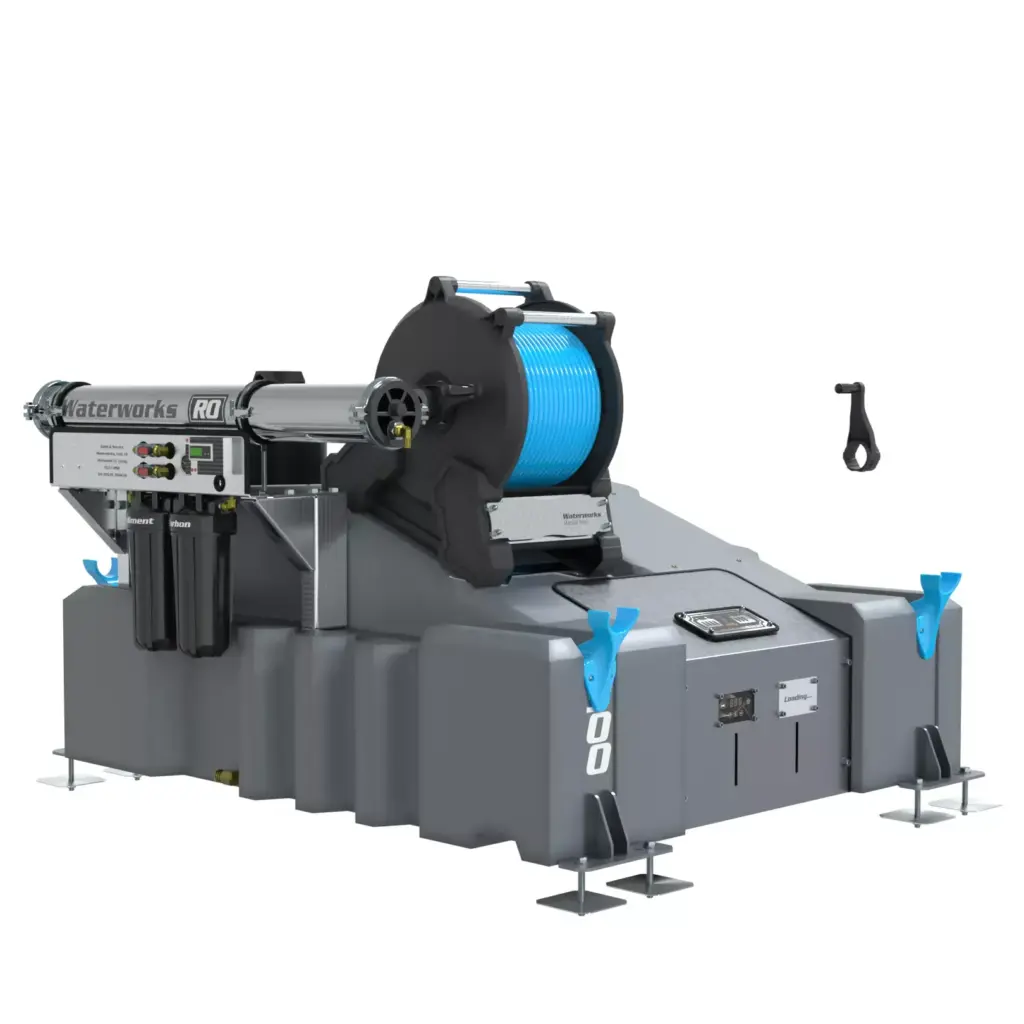
This one-operator setup combines a 500-litre tank, RO/DI filtration and a manual reel. Compare water-production requirements, daily use, maintenance and vehicle payload before choosing the final configuration.
GUIDE / 01
What the 500L RO/DI setup does
This configuration combines a 500-litre tank, reverse-osmosis and DI treatment, and a manual reel for one operator. RO reduces dissolved solids in the feed water; DI resin then polishes the output.
That treatment is intended for the cleaning application. It should not be described as disinfection or a guarantee that water is safe to drink. The result on glass also depends on technique, rinsing and surface condition.
Listed component | 500L RO/DI manual-reel configuration |
|---|---|
Treatment | RO and DI stages with pre-filters and dual TDS monitoring |
Delivery pump | 100PSI 12V Aquatec |
Controller | V16 Spring digital controller |
Structure | Stainless-steel frame and door |
Listed dimensions | 122cm wide × 144cm long × 97cm high |
Confirm the chosen hose, battery, charging and accessories in the current configuration summary.
GUIDE / 02
Check production as well as storage
A 500-litre tank does not mean the filtration system produces 500 litres immediately. Production depends on the equipment and feed conditions. Compare the required fill volume with the time available between rounds.
- Confirm the required feed pressure and flow.
- Allow for the RO reject-water stream and its appropriate disposal.
- Check pre-filter, membrane and resin servicing requirements.
- Measure the relevant outputs rather than assuming performance remains unchanged.
See RO versus DI for the running-cost questions to ask.
GUIDE / 03
Assess the vehicle and daily workload
Five hundred litres of water weighs approximately 500kg before equipment and other loads. Confirm the exact vehicle’s available payload, axle limits and installation requirements.
Record real water use on a normal and busy day. If the tank is not sufficient, compare refill arrangements and a suitable alternative capacity; do not choose a larger tank without checking the complete vehicle load.
GUIDE / 04
Review the manual-reel arrangement
Check how the hose leaves the van and where you will stand to rewind it. Winding direction, clear handle access and compatible fittings are important details in daily use.
Read the current selected specification for pump, controller, electrical supply, hose, accessories and delivery or installation. A product photograph is useful context, but it is not a list of everything included.
GUIDE / 05
Monitor and maintain the system
Keep records of incoming water, RO output and final polished output where the setup allows those checks. A change in readings can help distinguish a treatment issue from contamination elsewhere in the system.
Follow the specified filter changes, membrane care and frost-protection instructions. Inspect the hose, reel and brush as part of the same routine. There is no fixed servicing interval that suits every water supply and workload.
YOUR QUESTIONS, ANSWERED
Questions and answers
Is RO/DI always cheaper to run than DI alone?
No. Compare water consumption, resin use, pre-filters, membrane care and the feed conditions for your actual workload.
Does this system make high-rise work safe?
The tank and filtration do not determine safe reach. Assess the site, access method, pole limits and operator competence separately.
Can one operator use it all day without refilling?
That depends on measured consumption and working time. Tank capacity is not a guaranteed daily runtime.
PUT THE ADVICE TO WORK
Make the right choice for your setup.
Compare the current options and specifications, then talk to the Waterworks team if you need help matching equipment to your round.
Explore the equipment →FROM THE WATERWORKS TEAM
Practical equipment guides from Waterworks in Corby. For advice about your own configuration, contact the team.
YOUR NEXT READ
Keep building your knowledge.
KEEP READING
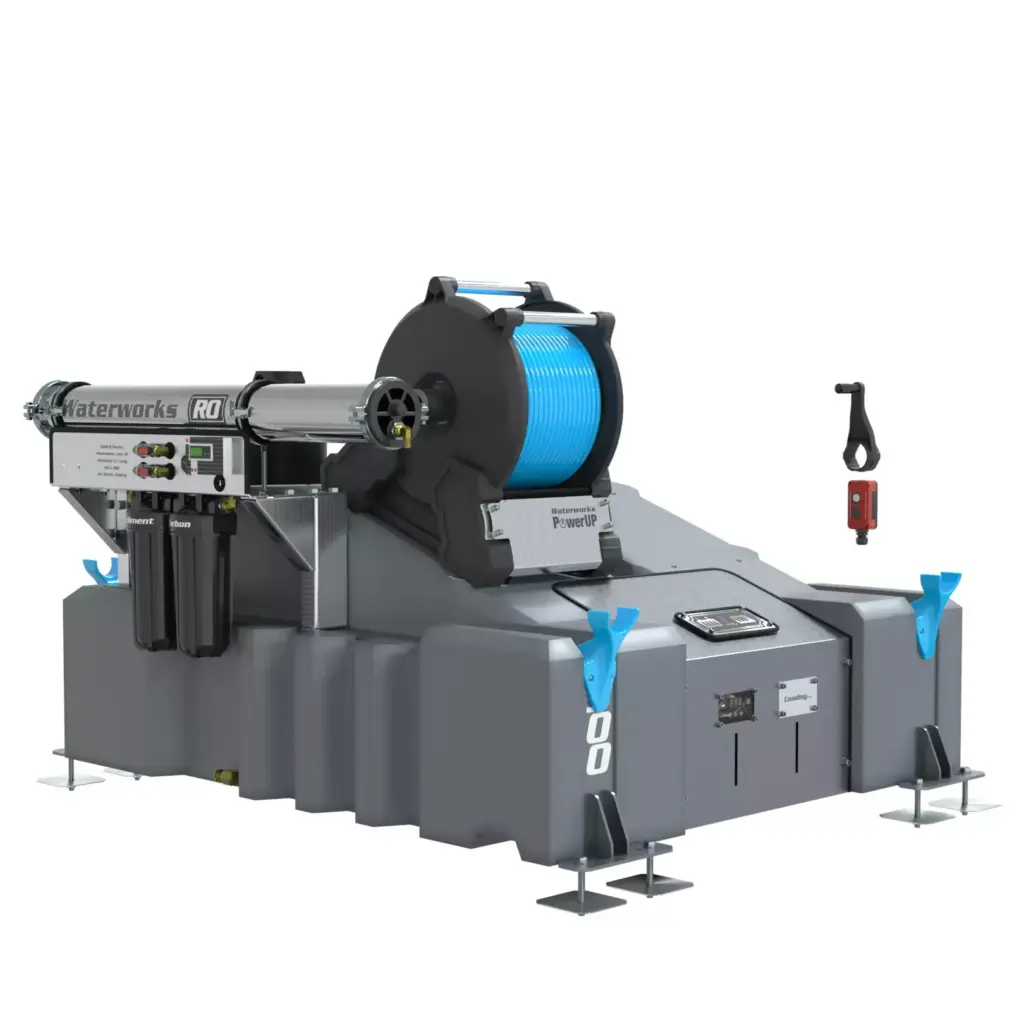
RO vs DI: choosing a window cleaning system
Read the guide →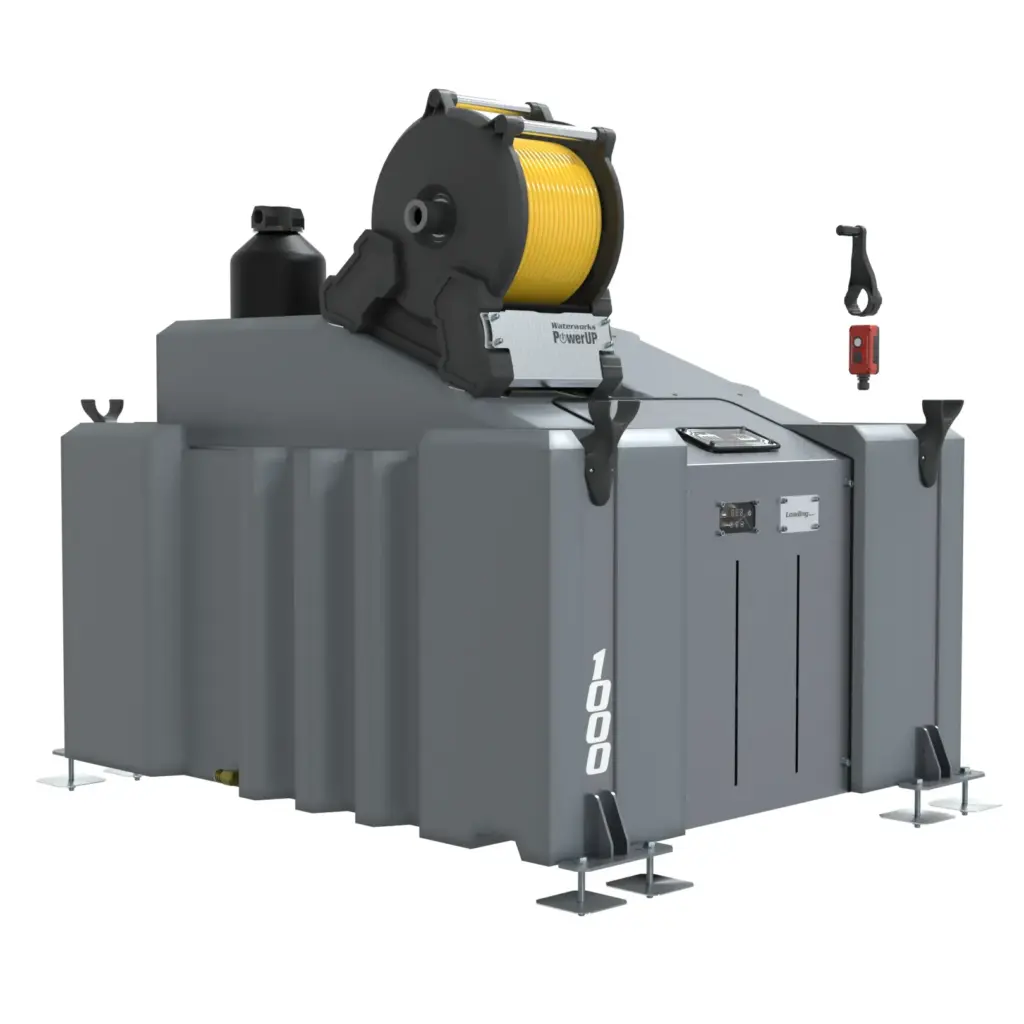
KEEP READING
500L, 750L or 1000L: choosing your water tank
Read the guide →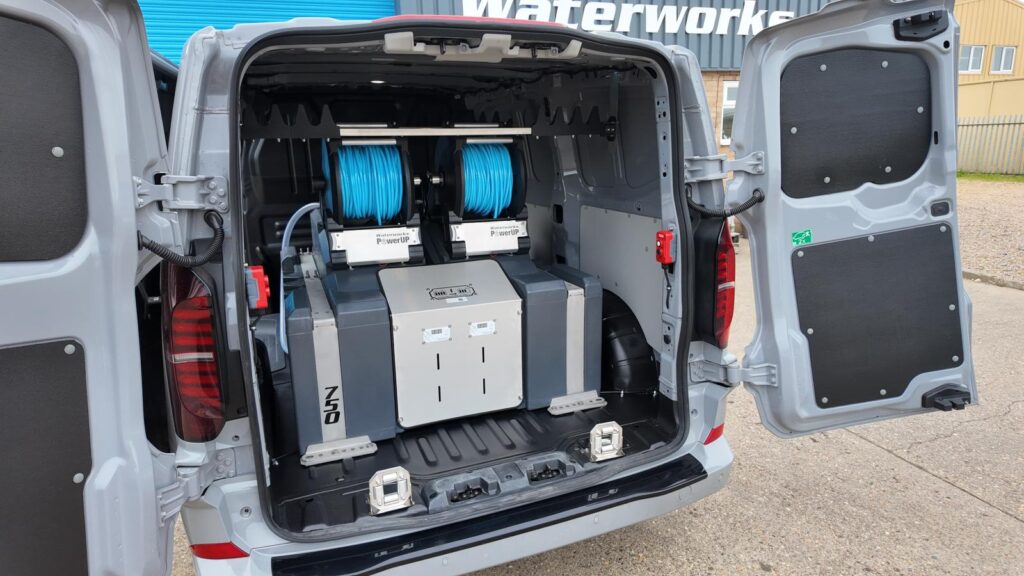
KEEP READING