
In this guide
THE SHORT ANSWER
The essentials.
Check the property and your equipment, confirm water quality, then clean frames and glass using controlled brush movements and a thorough rinse. The finish depends on water purity, surface condition and technique—not the pole alone.
KEEP THESE IN MIND
01
Check the work area, pole condition and safe working height.
02
Keep the hose route controlled and clear of other people.
03
Inspect the result and adjust your rinse technique where needed.
GUIDE / 01
Assess the property before extending the pole
Check access, the surface to be cleaned and the route between your vehicle and the windows. Look for damaged glazing, loose seals, open vents, overhead cables, pedestrians and changes in ground level. Agree any exclusions with the customer before starting.
A pole can avoid some work at height, but it does not remove every risk. Use equipment within its specified limits and follow HSE window-cleaning guidance. Where the job cannot be controlled safely, choose another method or obtain specialist help.
GUIDE / 02
Prepare the water and equipment
- Check the final water output with a suitable TDS meter and follow the system’s water-quality guidance.
- Inspect the pole, clamps, brush and hose for damage or contamination.
- Connect compatible fittings and test the flow before approaching the glass.
- Route the hose so that it does not create an uncontrolled trip hazard.
- Use the pole and brush combination specified for the reach and surface.
A low TDS reading helps identify dissolved solids in the water; it cannot tell you whether the brush is dirty or whether residue is running from the frames.
GUIDE / 03
Clean, then rinse methodically
- Start with frames and edges. Loosen accumulated dirt without forcing water into vents, damaged seals or openings.
- Agitate the glass. Use controlled, overlapping brush passes and work in manageable areas. Avoid pressing harder than the equipment or surface requires.
- Rinse thoroughly. Work from the top down with clean water, carrying loosened dirt away from the cleaned area. Follow the brush and jet instructions for the appropriate rinsing technique.
- Inspect the result. Check a representative window after drying. Revisit any missed areas and identify the cause of streaks before repeating the whole job.
A first clean may need more attention than a regular maintenance visit. Drying time varies with weather and the surface; there is no fixed ten-minute rule.
GUIDE / 04
Troubleshoot marks instead of guessing
What you notice | What to check |
|---|---|
Spots across the glass | Final water quality and contamination in the tank, hose or brush |
Runs from the upper frame | Dirty seals or frames releasing residue after the rinse |
Missed patches | Brush coverage, angle and contact with the surface |
Persistent marks after a careful clean | Existing mineral deposits, surface damage or contamination needing a different treatment |
Do not assume that every stain is removable with more brushing. Check the glass or coating manufacturer’s guidance before using abrasives, scrapers or specialist products.
GUIDE / 05
Pack down ready for the next visit
Bring the hose back under control, protect the brush from grit and check for damage as you put equipment away. Follow the manufacturer’s cleaning and storage instructions, particularly during freezing weather.
For the equipment behind the method, see essential window cleaning tools and the pure-water guide.
YOUR QUESTIONS, ANSWERED
Questions and answers
Can I use ordinary tap water with a water-fed pole?
Tap water can leave mineral spots if allowed to dry on the glass. A pure-water rinse uses treated water; traditional cleaning can use a suitable solution followed by removal with a squeegee.
How high can I safely work?
There is no universal safe height. The pole’s limits, site conditions, overhead hazards, operator competence and work method all need to be considered.
Why are there streaks even with low-TDS water?
Check frame contamination, brush cleanliness, agitation and rinsing. Water quality is only one part of the result.
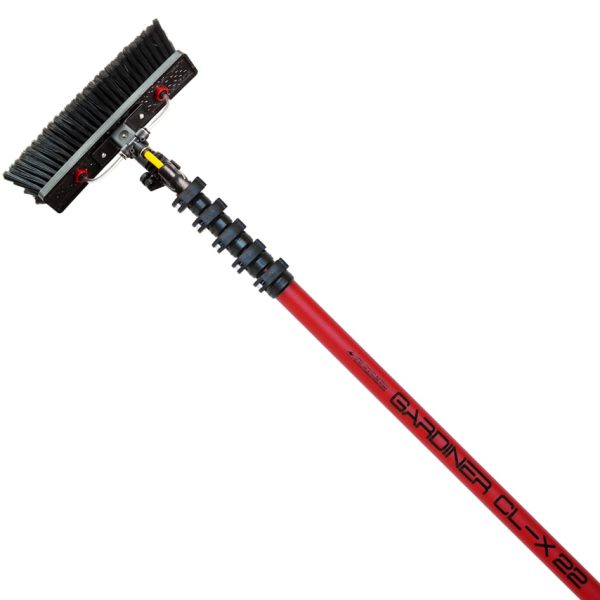
PUT THE ADVICE TO WORK
Make the right choice for your setup.
Compare the current options and specifications, then talk to the Waterworks team if you need help matching equipment to your round.
Explore the equipment →FROM THE WATERWORKS TEAM
Practical equipment guides from Waterworks in Corby. For advice about your own configuration, contact the team.
YOUR NEXT READ
Keep building your knowledge.
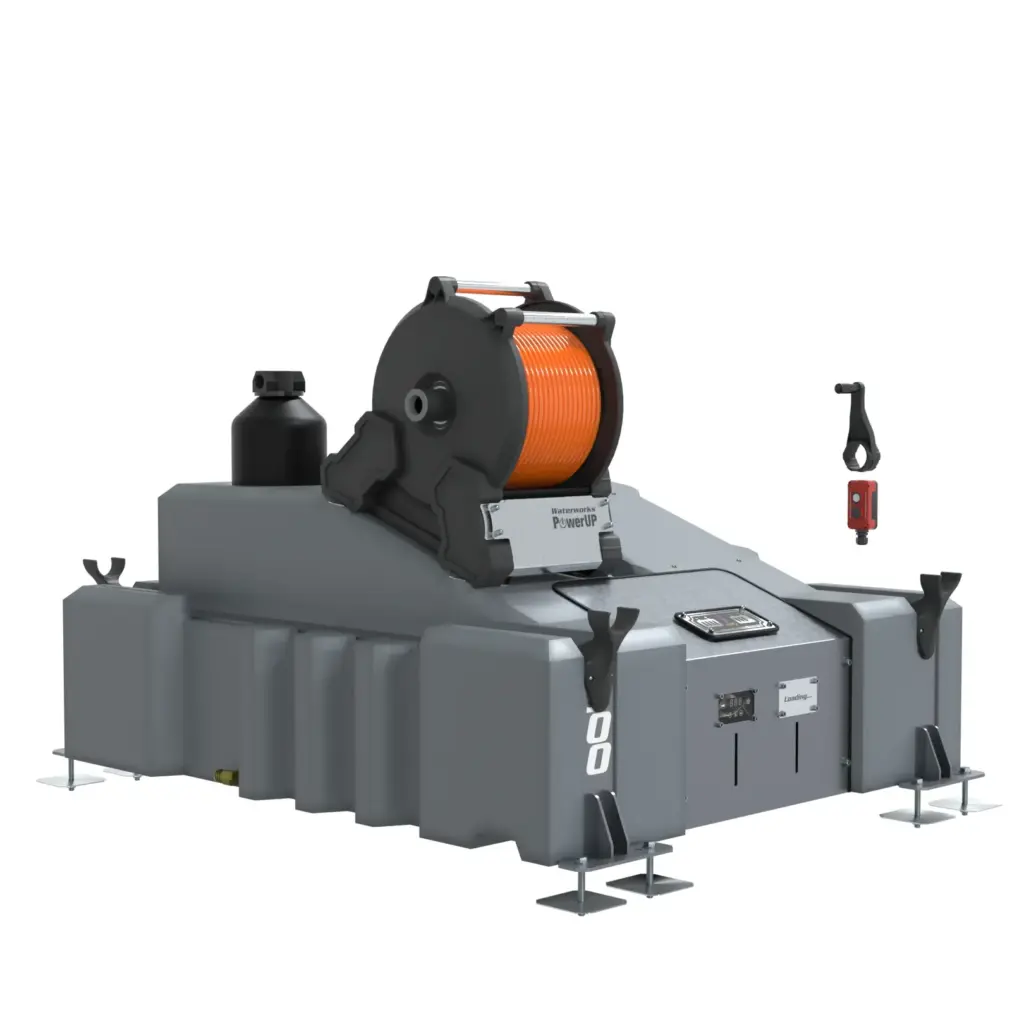
KEEP READING
Pure-water window cleaning explained
Read the guide →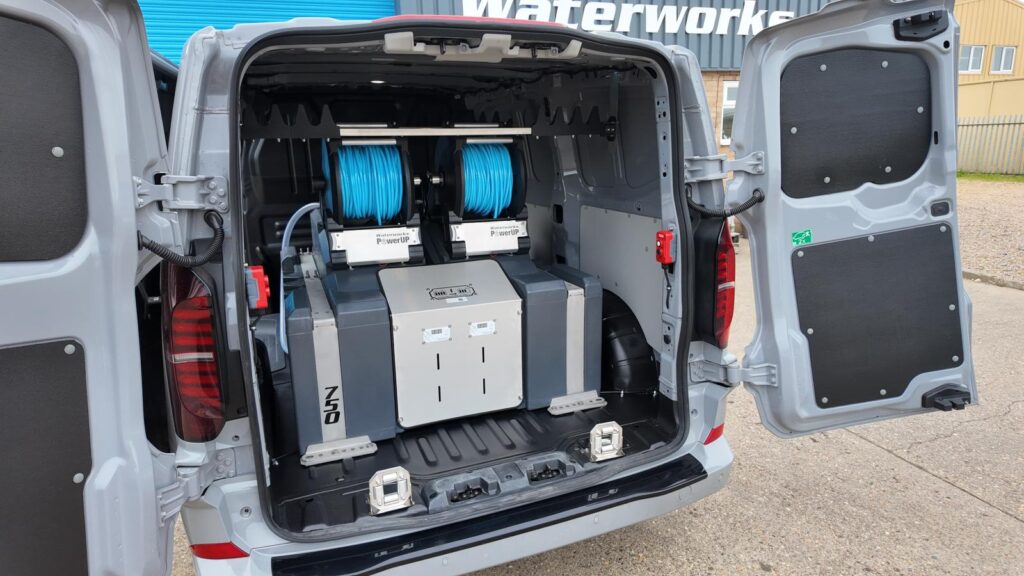
KEEP READING
How to set up a water-fed pole system
Read the guide →
KEEP READING