
In this guide
THE SHORT ANSWER
The essentials.
A manual reel uses hand winding and keeps the setup simple. An electric reel provides powered retrieval and needs a suitable electrical supply. Choose around how often you deploy hose, your vehicle layout and your budget.
KEEP THESE IN MIND
01
Compare daily retrieval effort and the number of hose deployments.
02
Check power and installation requirements for an electric reel.
03
Choose winding orientation, capacity, hose and fittings together.
GUIDE / 01
The main difference is retrieval
Both reel types store hose and support its controlled deployment. A manual reel is wound by hand. An electric reel uses powered retrieval and needs the specified electrical supply.
The choice is not determined by tank capacity or whether a customer is domestic or commercial. The frequency of retrieval, hose runs, working position and available installation space are more useful starting points.
GUIDE / 02
Compare the working requirements
Consideration | Manual reel | Electric reel |
|---|---|---|
Retrieval | Hand winding | Powered rewind under operator control |
Power for winding | No electrical winding supply | Suitable supply and installation required |
Daily use | Consider handle access and repeated winding | Consider control access and hose routing |
Maintenance | Hose, swivel, mounting and winding components | The same checks plus the powered drive and electrical supply |
Capacity | Check the exact reel and hose specification | Check the exact reel and hose specification |
Do not assume a manual reel is limited to 50 metres, or that electric reels have one universal capacity. Hose diameter and model specification matter.
GUIDE / 03
When manual winding may suit you
A manual reel is worth considering when you prefer a straightforward arrangement and hand retrieval is practical for your round. Position the handle so it can be used comfortably without reaching around other equipment.
Compare the complete reel and mounting specification. Material, weight, connections and capacity vary by product; the Waterworks composite manual reel should not be described generically as a powder-coated steel reel.
GUIDE / 04
When powered retrieval may be useful
Frequent hose retrieval can make an electric reel attractive. Measure your existing pack-down routine and compare the potential benefit with purchase, installation and maintenance costs. There is no universal “twice as fast” result or guaranteed payback period.
Powered retrieval still requires attention. Keep the hose route controlled and stop for obstructions. Check the power supply, controls and mounting requirements before buying.
GUIDE / 05
Check these details before ordering
- Winding direction and access to the handle or control.
- Dimensions and space around the loaded reel.
- Hose type, length, diameter and connection options.
- Mounting method and any compatible guides or stacker.
- Electrical requirements for the selected powered model.
If you want to change an existing manual setup later, ask about the exact upgrade route. Do not assume that every manual reel accepts an electric conversion kit.
YOUR QUESTIONS, ANSWERED
Questions and answers
Is an electric reel always the better option?
No. Compare your retrieval routine, installation constraints and budget. Manual and electric arrangements can both be appropriate.
Does tank size determine reel type?
No. Tank capacity relates to water storage. Reel choice depends on hose handling, mounting and operating requirements.
Can both types be used with a stacker?
Only where the specific reel and stacker are compatible. Confirm the models, mounting and total height before ordering.
FIND YOUR WAY TO WIND
Compare the reel range.
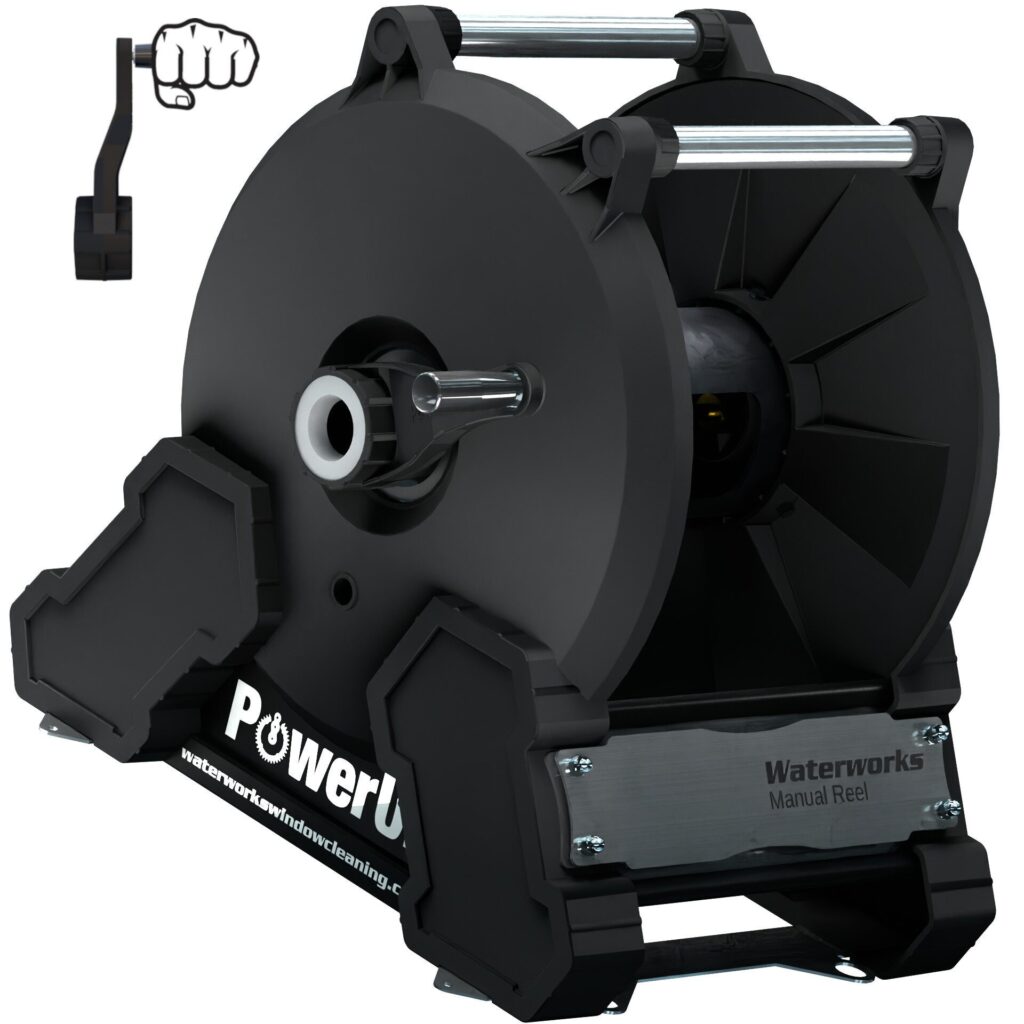
Manual reels
You control the rewind.
A hand-wound reel for a straightforward setup. Check winding direction, fittings and hose compatibility.
Explore manual reels →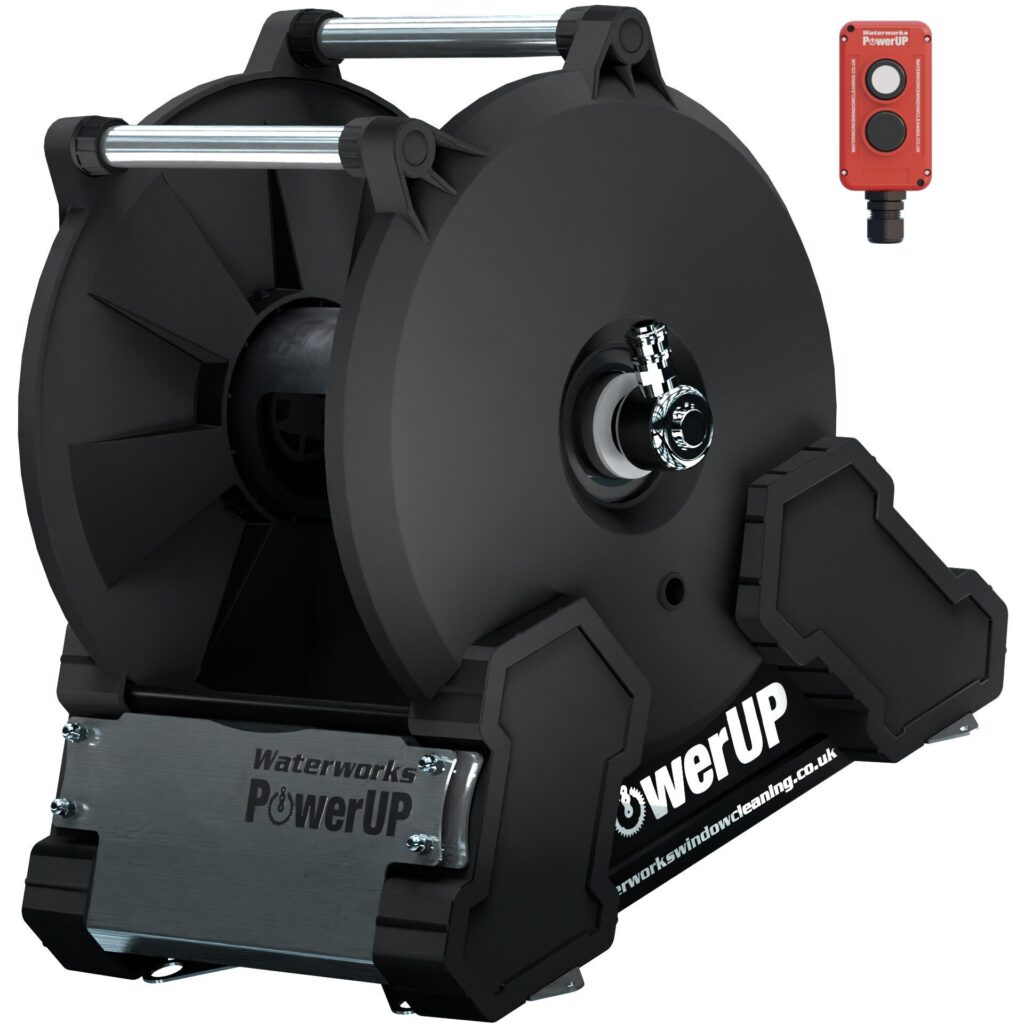
Electric reels
Powered retrieval.
PowerUP electric rewind for your working day. Plan the reel position and the required electrical supply.
Explore electric reels →FROM THE WATERWORKS TEAM
Practical equipment guides from Waterworks in Corby. For advice about your own configuration, contact the team.
YOUR NEXT READ
Keep building your knowledge.
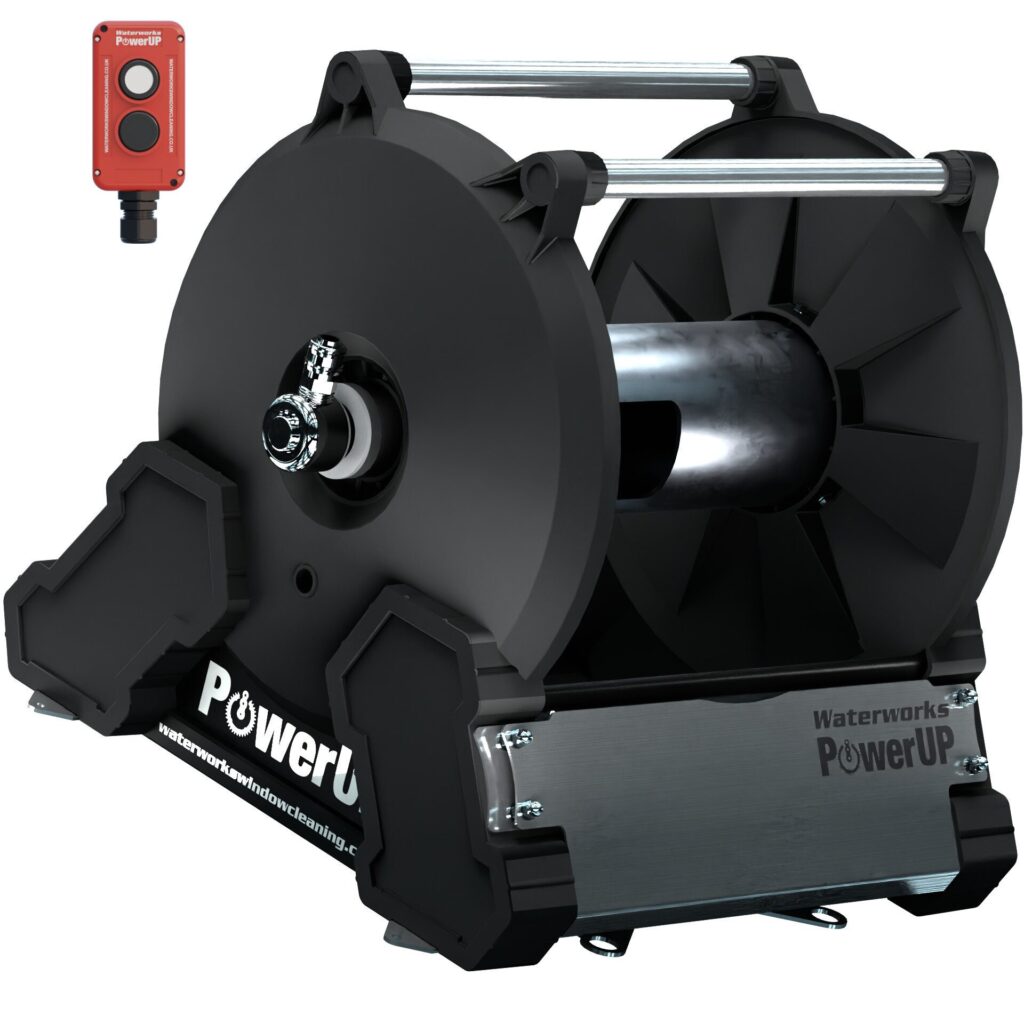
KEEP READING
PowerUP XL: a closer look at the larger reel
Read the guide →KEEP READING
The Waterworks manual hose reel: a closer look
Read the guide →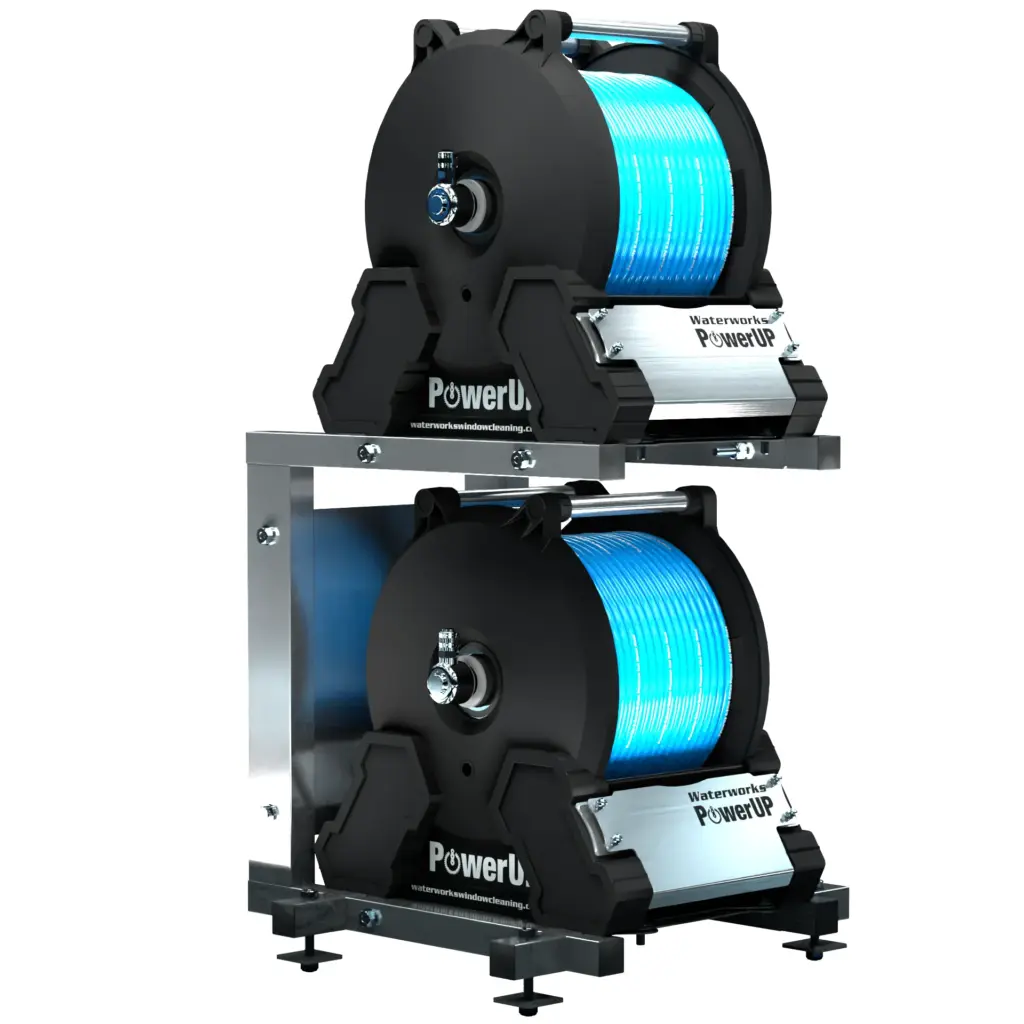
KEEP READING