

In this guide
THE SHORT ANSWER
The essentials.
Pure-water cleaning combines treated water with a pole and brush to clean and rinse glass. It can reduce the need for ladders on suitable jobs, while effective cleaning still depends on water quality, technique and a site-specific assessment.
GUIDE / 01
What changes for the operator
A suitable water-fed pole can make some exterior windows accessible from ground level and bring frame cleaning, glass cleaning and rinsing into one routine. The practical benefit depends on access, surface condition and the way the equipment is used.
This guide focuses on what that means for the working day and customer experience. For treatment methods and water quality, see pure-water window cleaning explained.
GUIDE / 02
Less access equipment on suitable jobs
Where the site allows it, a pole can reduce the need to move access equipment between windows. That does not remove the need for a site assessment, controlled hose routes or competent operation.
The method is not a solution for every height or obstruction. Assess the actual property and follow HSE guidance rather than relying on a number of storeys quoted in a product article.
GUIDE / 03
Explain the finish to customers
A pure-water rinse is normally left to dry. Explain this before the first visit so customers understand why the glass may still be wet when you finish. Inspect the dried result on a representative area, particularly during the first clean.
Treatment reduces dissolved minerals in the rinse water. It does not make water attract dirt magnetically, and it does not guarantee removal of old deposits or contamination from frames and seals.
GUIDE / 04
Compare the benefits with the operating costs
Potential benefit | What to check |
|---|---|
Fewer changes of access equipment | Whether the site and pole permit the chosen method |
Frames and glass cleaned in one routine | Surface condition, suitable brush and thorough rinsing |
Less routine detergent use | Whether the contamination needs a separate approved treatment |
A repeatable working routine | Water supply, storage, maintenance and operator technique |
Account for resin, filters, water use and equipment care. Avoid promising that every job will take half the time or that glass will stay clean for a fixed extra period.
GUIDE / 05
Set expectations for the first clean
- Confirm which windows, frames and sills are included.
- Identify damaged seals, open vents and existing stains.
- Explain any inaccessible areas or specialist work.
- Tell the customer how to report an issue after the glass dries.
Traditional methods still have a place, especially indoors or where runoff is unsuitable. A good service selects the method for the work rather than presenting one approach as universally superior.
YOUR QUESTIONS, ANSWERED
Questions and answers
Will the windows stay clean longer?
There is no fixed guarantee. Exposure, weather, nearby activity and the condition of the surface affect how quickly dirt returns.
Is it better for every property?
No. Suitability depends on access, surfaces, water runoff and the work required.
TWO WAYS TO TREAT YOUR WATER
Different filtration. Same goal.
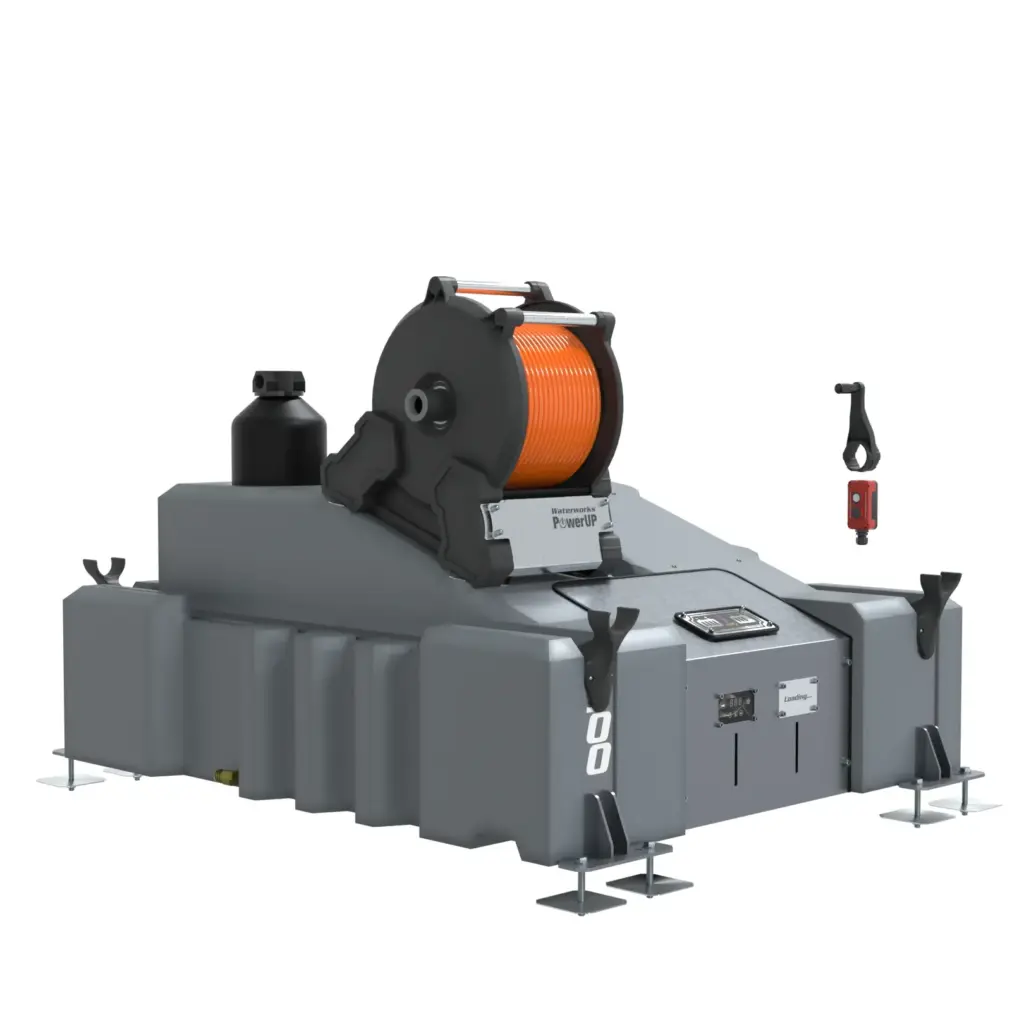
DI systems
Keep filtration simple.
Ion-exchange resin removes dissolved ions. Running costs depend on incoming water quality and how much you use.
Explore DI systems →
RO systems
Build in purification.
A membrane reduces dissolved solids before resin polishing. Check production needs, pressure and maintenance.
Explore RO systems →FROM THE WATERWORKS TEAM
Practical equipment guides from Waterworks in Corby. For advice about your own configuration, contact the team.
YOUR NEXT READ
Keep building your knowledge.
KEEP READING
Pure-water window cleaning explained
Read the guide →KEEP READING
RO vs DI: choosing a window cleaning system
Read the guide →
KEEP READING