
In this guide
THE SHORT ANSWER
The essentials.
RO removes much of the dissolved mineral content using a membrane. DI removes ions using resin. Your incoming water quality and daily water use determine whether DI alone or an RO/DI combination is the more practical choice.
KEEP THESE IN MIND
01
Test incoming and final water with a suitable TDS meter.
02
Compare resin, filters, water use and maintenance—not only the purchase price.
03
Choose tank capacity separately, using workload and vehicle payload.
GUIDE / 01
What is the difference between RO and DI?
Reverse osmosis (RO) uses pressure to pass water through a membrane, reducing dissolved solids. Deionisation (DI) uses ion-exchange resin to remove dissolved ions. An RO/DI setup combines the two: RO does much of the removal, then DI polishes the water.
DI can also be used on its own. Whether that is economical depends on the incoming water and how much purified water you need. Higher incoming dissolved-solids levels generally use up resin more quickly.
Compare the two approaches
What to compare | DI only | RO followed by DI |
|---|---|---|
How it works | Water passes through ion-exchange resin. | A membrane reduces dissolved solids before resin polishing. |
Main consumables | Resin and any pre-filtration specified for the setup. | Pre-filters, membrane and polishing resin. |
Running-cost question | How much water can your resin treat at your incoming TDS? | How do resin savings compare with filter costs, water use and maintenance? |
Installation question | Does the delivery and storage arrangement suit the work? | Are the feed pressure, production rate and reject-water arrangements suitable? |
Water-quality check | Measure the output; resin performance changes with use. | Measure the RO output and the final polished water. |
GUIDE / 02
How do you choose the right filtration?
1. Measure your incoming water
Use a suitable TDS meter to establish a baseline for your supply. TDS is a measure of dissolved solids; it is not the same measurement as water hardness. Your water supplier’s information can add context, but test the water you will actually use.
2. Estimate your daily consumption
Record how much water you use on a typical day and during a busy period. A lower-volume operation and a two-operator round may have very different production and storage needs, even in the same area.
3. Compare the complete running cost
Consider resin replacement, pre-filters, membrane care, water use, any power requirements and time spent maintaining the equipment. RO produces a reject stream as part of its separation process, so account for that water and the manufacturer’s operating requirements.
4. Check production and storage separately
Filtration determines how you produce water. Tank capacity determines how much you can carry. If you already have a suitable supply of purified water, a delivery-only system may be worth considering.
GUIDE / 03
Which tank size and vehicle setup do you need?
Waterworks offers 500L, 750L and 1000L system configurations. Compare capacity with daily consumption, space and the vehicle’s available payload. Water alone weighs approximately 1kg per litre; the equipment, mounting frame, occupants and other loads must also be included.
Plan access to filters, reels, controls and maintenance points before choosing a layout. The tank-capacity guide explains the main trade-offs.
GUIDE / 04
Does pure water guarantee a spotless finish?
No. Removing dissolved minerals reduces spotting from the water itself, but the result also depends on the surface, brush condition, agitation, rinsing and contamination from frames or seals. A low TDS reading does not mean water is sterile or suitable for drinking.
Check water quality and inspect your cleaning results. Follow the instructions for your system and the surfaces you clean. For the practical method, see cleaning windows with a water-fed pole.
GUIDE / 05
What should you check during maintenance?
- Water quality: record incoming and final TDS so a change is easier to spot.
- Pre-filters: follow the specified replacement schedule and investigate reduced flow or pressure.
- Membrane: follow the manufacturer’s flushing, storage and pressure guidance.
- Resin: monitor the polished output and replace resin when it no longer meets the required performance.
- Delivery equipment: inspect hoses, connections, reels and the brush as part of the same routine.
There is no universal replacement interval for every supply and workload. If performance changes, identify the cause before replacing parts or altering pressure settings.
YOUR QUESTIONS, ANSWERED
RO and DI questions
Can DI work with high-TDS water?
DI resin can remove dissolved ions from high-TDS water, but it may be consumed more quickly. Compare the likely resin use with an RO/DI setup for your actual water volume.
Is RO always necessary?
No. A DI-only setup or a supply of already-purified water may meet your needs. Make the decision using water quality, consumption and running costs.
Do I need a booster pump?
That depends on the membrane system and feed conditions. Check the specified pressure and flow requirements for your equipment rather than assuming every RO setup needs one.
How often should I change resin?
Use output-water measurements and the equipment instructions. Incoming dissolved solids and the volume treated affect resin life, so a fixed calendar interval will not suit every setup.
GUIDE / 07
Compare a system for your working day
Explore the DI systems and RO systems, or work through System Builder. If you need help, share your incoming TDS, daily water use, operator numbers and vehicle details with the Waterworks team.
TWO WAYS TO TREAT YOUR WATER
Different filtration. Same goal.
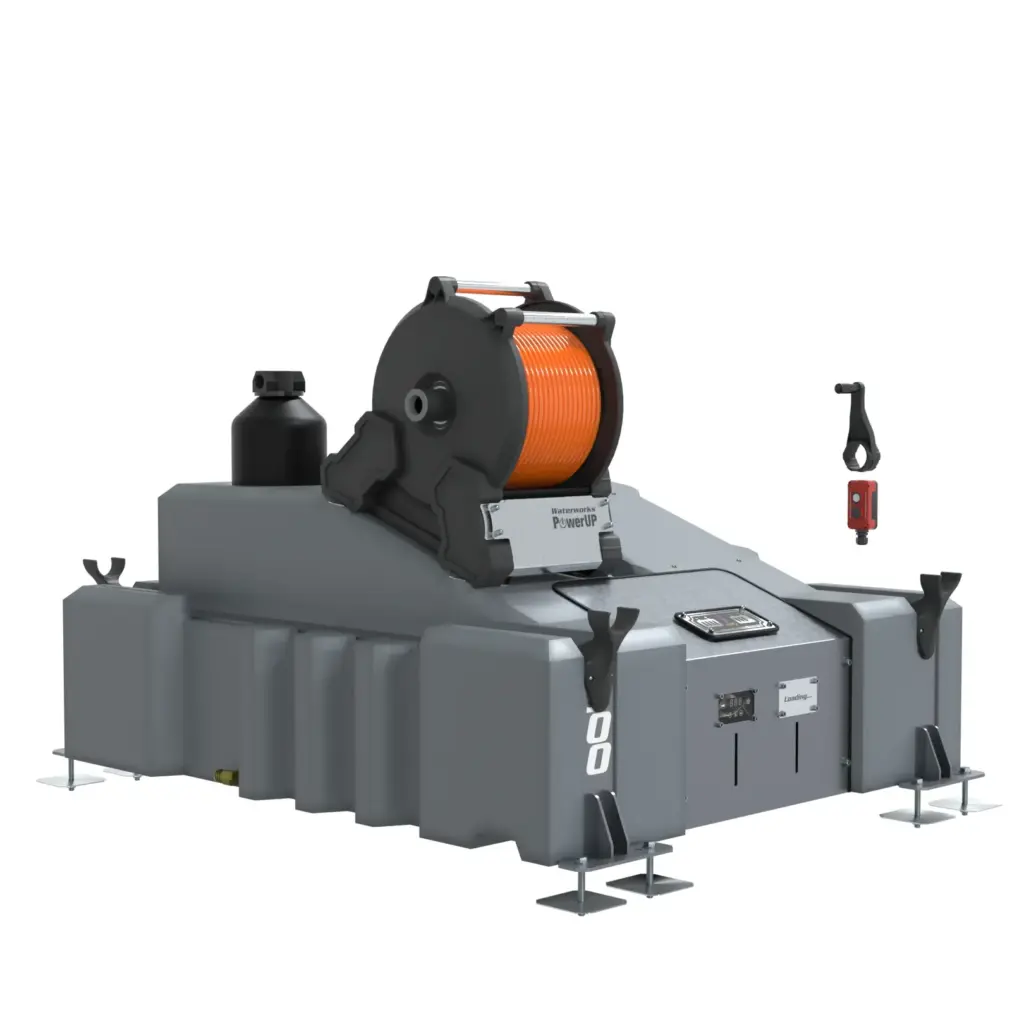
DI systems
Keep filtration simple.
Ion-exchange resin removes dissolved ions. Running costs depend on incoming water quality and how much you use.
Explore DI systems →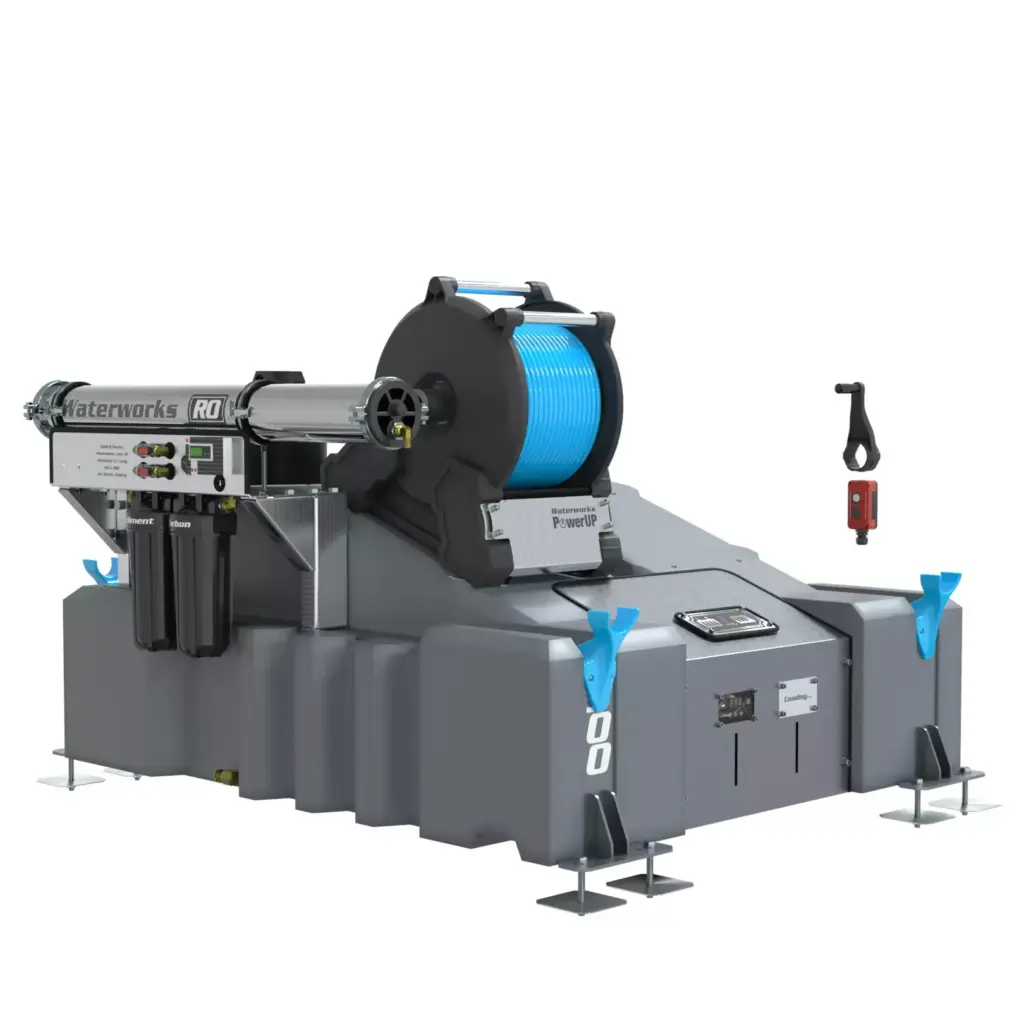
RO systems
Build in purification.
A membrane reduces dissolved solids before resin polishing. Check production needs, pressure and maintenance.
Explore RO systems →FROM THE WATERWORKS TEAM
Practical equipment guides from Waterworks in Corby. For advice about your own configuration, contact the team.
YOUR NEXT READ
Keep building your knowledge.
KEEP READING
Pure-water window cleaning explained
Read the guide →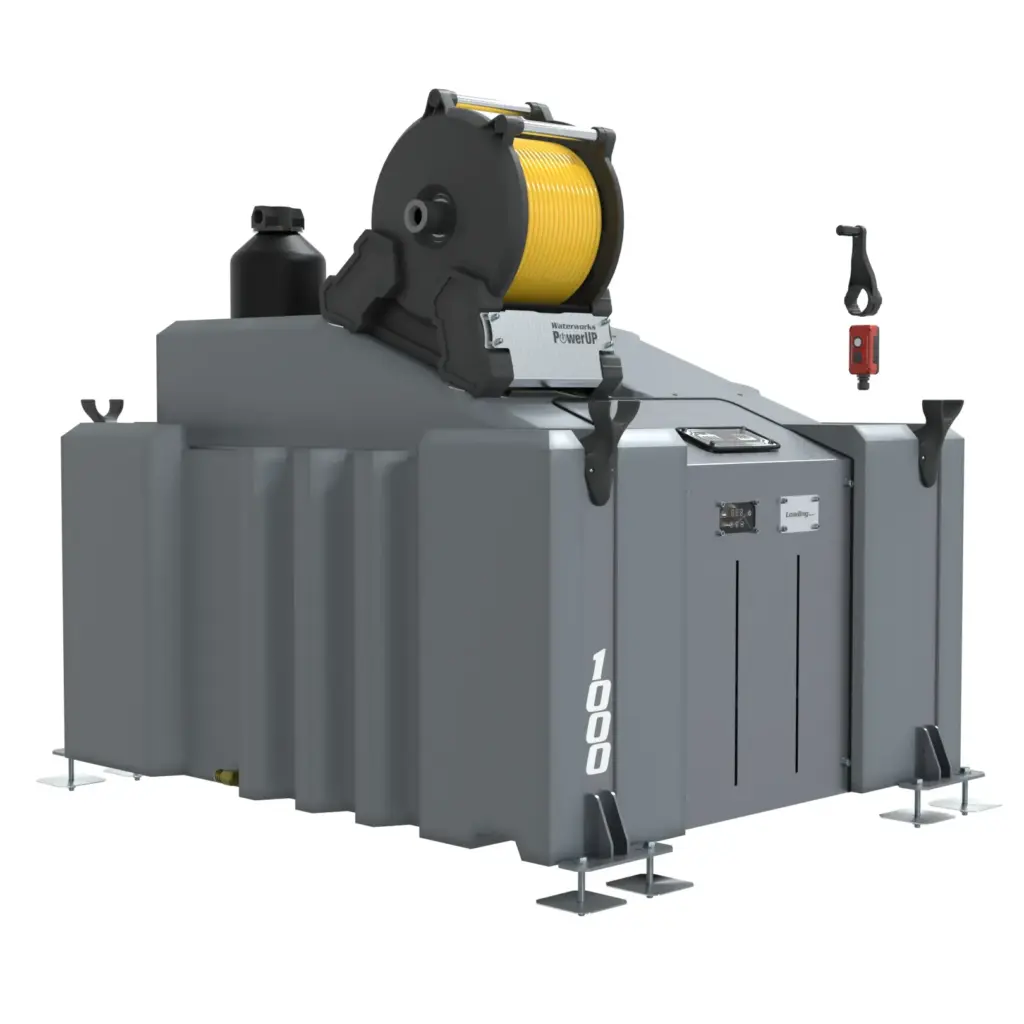
KEEP READING
500L, 750L or 1000L: choosing your water tank
Read the guide →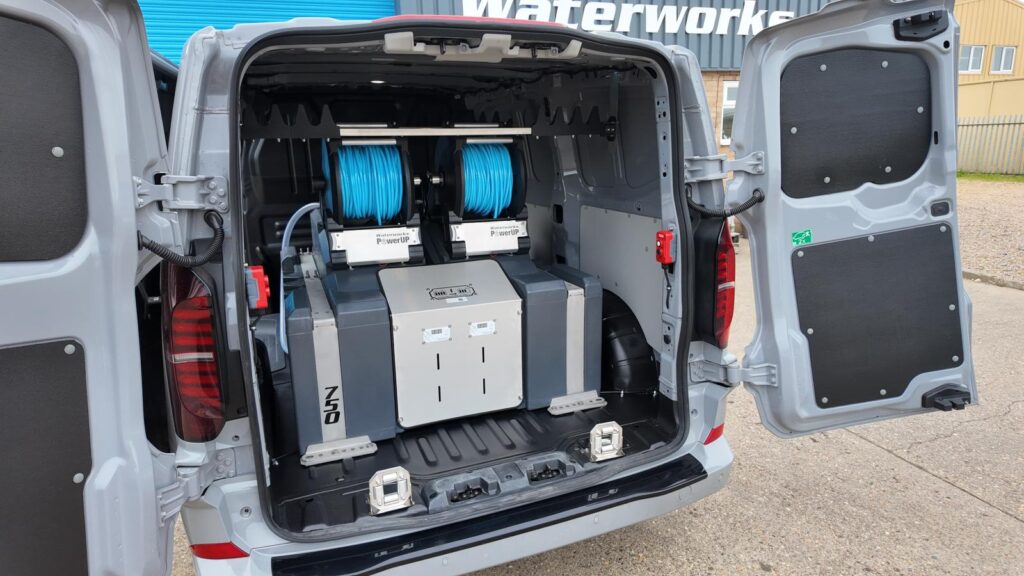
KEEP READING